Water Quality and Buffers
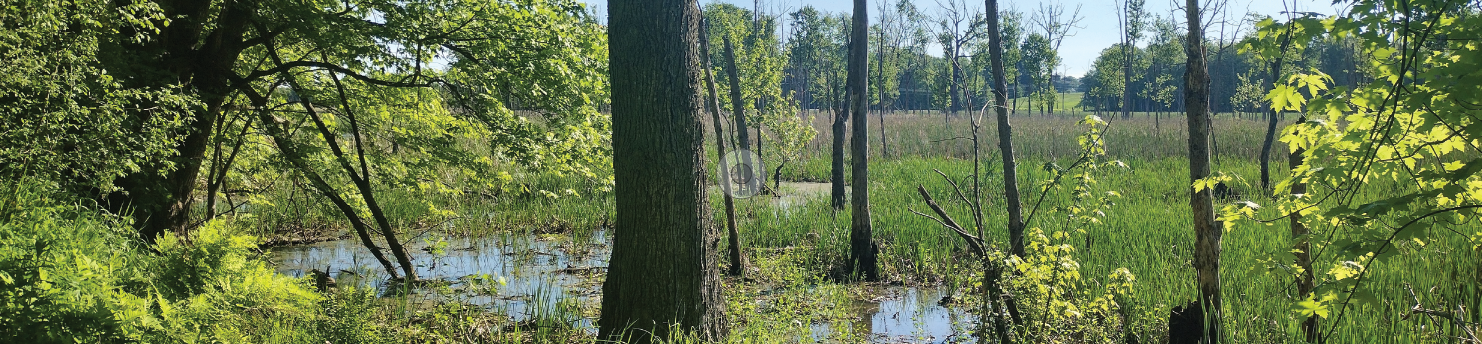
The Roy Marsh wetlands
What is an ecological buffer?
An ecological buffer is a protective living barrier around an ecologically sensitive area, usually a river, shoreline, or wetland. To be effective, a buffer must be wide, ideally 50 feet or more, depending on the size and steepness of the area. It should also include all 5 tiers of vegetation: duff (decaying organic matter), ground cover, shrubs, understory, and canopy.
Why are buffers important?
Buffers do many things. Dense vegetation along a buffer slows down and spreads out incoming storm water. This reduces the water’s erosive power and allows excess nutrients such as phosphorus, as well as pollutants like heavy metals and oil, to settle instead of entering the lake.
Buffers act like sponges, soaking up, storing, and slowly releasing storm water. This helps prevent flooding and erosion, and protects wetlands and streams from getting overloaded during storm events.
Buffers provide habitat for wildlife, especially songbirds, fish, and amphibians. They also provide connectivity between different habitat types, which supports a wide range of animals.
Finally, buffers are incredibly important for protecting human and natural communities from the effects of climate change by sequestering carbon, regulating microclimates, and protecting water and soil heath.
How is SHLT protecting buffers?
For 29 years, South Hero Land Trust has been protecting buffers through our conservation work. Every conservation easement includes special ecological protection zones, which come with extra restrictions and guidance to help landowners steward these important places. Recognizing that conservation by itself isn’t enough to protect water quality, SHLT is also engaged in restoration of buffers along streams, shorelines, and wetlands.